Washington’s Expanding Confrontation with Venezuela: A Deepening Geopolitical Standoff
Washington’s Expanding Confrontation with Venezuela: The relationship between the United States and Venezuela has entered one of its most strained periods, marked by escalating accusations, aggressive enforcement actions, and rising speculation over potential military intervention. The Trump administration has openly framed its stance around combatting drug trafficking and pressuring Nicolás Maduro’s government, a strategy that has intensified international debate and drawn widespread media attention across the US.
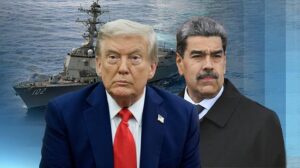
Growing Tensions Following the Seizure of an Oil Tanker
The dispute deepened when the United States seized a large, Venezuela-linked oil tanker near the country’s coast. After taking control of the vessel, US authorities announced fresh sanctions targeting several shipping companies and individuals connected with the Venezuelan leadership. According to the US Treasury, multiple vessels were involved in unsafe and deceptive maritime practices that ultimately benefitted Maduro’s administration. These measures added to an already extensive sanctions framework that has choked Venezuela’s oil-dependent economy.
Impact on Venezuela’s Oil-Driven Economy
Venezuela holds the world’s largest proven oil reserves and relies on crude exports for the overwhelming majority of its foreign revenue. Despite geopolitical tensions, a substantial portion of Venezuelan crude traditionally flows to global energy players, including major corporations such as Chevron. However, a significant amount also finds its way to markets like Iran, China, Russia, and India through unofficial channels. The US claims that the recently detained tanker, identified as Skipper, was destined for Iran, reinforcing Washington’s narrative that illicit oil trading supports the Maduro government.
How American Media Outlets Are Interpreting the Escalation
Major US news organizations have dedicated extensive coverage to the unfolding conflict. Reports emphasize that Washington’s pressure campaign now includes expanded military presence in the Caribbean, direct action against suspected drug-related vessels, and increasingly forceful statements aimed at forcing political change in Caracas.
CNN’s Analysis of US Targeting of the Oil Sector
CNN highlighted that the US has aimed its strategy squarely at Venezuela’s oil infrastructure, a crucial pillar of Maduro’s power. The network reported that Maduro urged Washington to avoid initiating a conflict over oil and argued that external pressure seeks to reshape Venezuela’s political landscape for control over its natural resources.
ABC News on the Fate of the Seized Oil Cargo
ABC News reported that the Trump administration intends to move the seized tanker’s oil to a US port and potentially retain the cargo, subject to legal proceedings. Venezuelan officials condemned the seizure as an act of maritime piracy, adding a new layer of diplomatic outrage to the situation.
CBS News on Potential Expansion of Operations
CBS News noted that the tanker seizure may be part of a broader operational shift, with the US preparing for additional missions targeting drug-related maritime activity. The outlet also reported increased American military deployment in the region, including fighter aircraft operations near Venezuelan waters.
Time Magazine’s Perspective on Political Outcomes
Time Magazine examined the broader implications of Washington’s strategy, including the role of Venezuelan opposition figures such as María Corina Machado, who has endorsed the US pressure campaign. The publication explored scenarios for post-Maduro governance and the challenges of stabilizing a nation of nearly 30 million people after years of political and economic turmoil.
USA Today on the Rationale Behind Washington’s Threats
USA Today focused on Washington’s repeated assertions that Maduro is involved in drug trafficking networks. Although US officials accuse the Venezuelan leadership of links to a criminal organization known as Cartel de los Soles, experts cited by the publication argue that the group functions more as a loose corruption network than a structured narcotics cartel. Maduro has consistently denied any involvement in illicit drug activities.