Washington: Historic Flooding Grips State as Skagit River Reaches Record Levels
Washington: Communities across western Washington state faced unprecedented challenges in mid-December 2025 as relentless heavy rains triggered severe flooding, forcing widespread evacuations and raising concerns over infrastructure stability in the Pacific Northwest. The Skagit River, swollen by a powerful atmospheric river system, became the focal point of the crisis, impacting thousands of residents in areas like Burlington and Mount Vernon with water levels surpassing previous records.
Causes of the Massive Rainfall
A series of atmospheric river events brought extraordinary amounts of moisture from the Pacific Ocean inland, dumping between 6 and 20 inches of rain across the region in just one week. Meteorologists described this as equivalent to a month’s worth of precipitation compressed into days, overwhelming rivers and soils already saturated from earlier storms. These weather patterns, originating far across the ocean, intensified the deluge from northern Oregon through western Washington and into parts of British Columbia, Idaho, and Montana.
Evacuation Efforts and Community Response
Emergency officials issued urgent evacuation orders affecting up to 100,000 people statewide, with the Skagit River floodplain serving as the epicenter. The entire town of Burlington, home to around 9,200 residents near Puget Sound, received mandatory evacuation notices as water threatened homes and businesses. National Guard troops and local sheriff’s deputies went door-to-door, using inflatable rafts to rescue stranded individuals from muddy floodwaters. In nearby Mount Vernon, the river crested at approximately 37.73 feet, setting a new record and testing levees reinforced after previous floods.
Level 3 “go now” alerts urged residents in low-lying areas to seek higher ground immediately. Shelters opened in schools and community centers, providing refuge for displaced families and their pets. No fatalities were reported amid the chaos, a testament to coordinated response efforts, though the emotional toll on communities was evident as people fled with essential belongings.
Impact on Infrastructure and Transportation
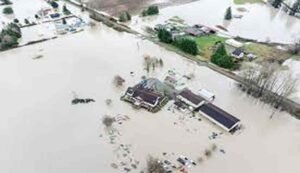
Floodwaters submerged homes nearly to their rooftops in some areas, turning neighborhoods into vast lakes of brown water. Dozens of roads and highways closed, isolating towns and disrupting daily life. Major freight rail lines, including sections of BNSF Railway, shut down due to washouts. In adjacent counties like Snohomish and King, additional rescues occurred as rivers turned communities into temporary islands, with sinkholes threatening levee integrity in places.
National Guard units delivered supplies to cut-off areas and assisted in monitoring vulnerable spots. Aerial views captured the extent of inundation, highlighting the vulnerability of agricultural lands and urban edges along river basins.
Levee Concerns and Ongoing Risks
As the Skagit River peaked, attention turned to flood control structures holding back the surge. Levees, repaired and strengthened since major events in 2021, faced their sternest test yet under immense pressure. Officials maintained flash flood watches downstream toward Puget Sound, warning that any breach could exacerbate already widespread damage. Fortunately, initial reports indicated the embankments held firm through the crest, but vigilance remained high.
In one close call, patrol teams quickly addressed a developing sinkhole along a levee edge, preventing potential collapse. The situation underscored ongoing debates about flood management in a region prone to such extreme weather.
Federal and State Support Measures
Governor Bob Ferguson declared a statewide emergency, activating resources and requesting expedited federal aid. The declaration facilitated faster assistance for road clearing, debris removal, and emergency shelters. U.S. Senator Maria Cantwell highlighted the approval of federal support, emphasizing its role in aiding evacuations and recovery.
California even dispatched search-and-rescue teams to bolster local efforts, reflecting interstate cooperation during the crisis.
Weather Outlook and Recovery Ahead
While rains eased by Friday, December 12, forecasters warned of a brief lull before another atmospheric river could bring renewed showers early the following week. Rivers began slow recedes, but major flood stages persisted, delaying returns home for many. Recovery promised to be lengthy, with assessments needed for damaged homes, farms, and infrastructure.
Communities rallied with volunteer efforts emerging as waters dropped, focusing on cleanup and rebuilding. The event highlighted the increasing intensity of Pacific Northwest storms, prompting discussions on long-term resilience strategies.
This flooding episode in Washington state served as a stark reminder of nature’s power, yet the absence of casualties amid such scale spoke to effective preparedness and rapid response from authorities and residents alike.