Travel restrictions: United States Expands Global Travel Restrictions Under Revised Immigration Policy
Travel restrictions: The United States has announced a significant expansion of its international travel restrictions, marking another major step in tightening immigration and border control policies. Former President Donald Trump signed a new proclamation that increases the total number of countries facing full or partial travel restrictions to 39. This move reflects a broader strategy aimed at strengthening entry regulations, improving national security, and enforcing stricter immigration standards across U.S. borders.
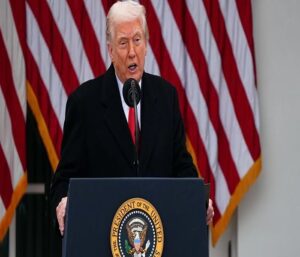
According to an official statement released by the White House, the decision was taken after identifying persistent shortcomings in screening processes, identity verification systems, and information-sharing mechanisms within the affected countries. U.S. authorities have emphasized that these deficiencies pose challenges in accurately assessing potential security risks associated with foreign nationals seeking entry into the country.
Rationale Behind the Expanded Travel Restrictions
The proclamation states that the imposed restrictions and limitations are essential to prevent the entry of foreign nationals whose risk profiles cannot be adequately evaluated due to insufficient or unreliable data. The U.S. administration has also highlighted that these measures are designed to encourage greater cooperation from foreign governments in areas such as data sharing, document verification, and immigration law enforcement.
Additionally, the policy aligns with broader foreign policy goals, including counterterrorism efforts and the protection of national security interests. Officials argue that stronger entry controls help safeguard the country while pushing partner nations to improve their internal systems related to travel documentation and security checks.
Countries Added to the Full Travel Ban List
Under the new proclamation, seven countries have been added to the full travel ban category, meaning that most forms of entry into the United States are suspended for their citizens. These countries are Laos, Sierra Leone, Burkina Faso, Mali, Niger, South Sudan, and Syria. It is worth noting that Laos and Sierra Leone were previously subject to partial restrictions, while South Sudan already faced stringent travel limitations before this update.
In a related development, individuals traveling on documents issued by the Palestinian Authority have also been placed under the full travel ban category, further expanding the scope of the restrictions.
Nations Facing Partial Travel Restrictions
In addition to the full bans, the U.S. has introduced partial travel restrictions on 15 new countries. These limitations may affect certain visa categories or types of travel rather than imposing a complete entry prohibition. The countries newly added to the partial restriction list are Angola, Antigua and Barbuda, Benin, Côte d’Ivoire, Dominica, Gabon, Gambia, Malawi, Mauritania, Nigeria, Senegal, Tanzania, Tonga, Zambia, and Zimbabwe.
These partial restrictions are intended to address specific concerns related to immigration compliance and security cooperation, without entirely cutting off travel channels.
Previously Restricted Countries Remain Affected
The updated policy also reaffirms existing travel bans. Countries currently under a full travel ban include Afghanistan, Myanmar, Chad, the Republic of Congo, Equatorial Guinea, Eritrea, Haiti, Iran, Libya, Somalia, Sudan, and Yemen. Meanwhile, nations such as Burundi, Cuba, Laos, Sierra Leone, Togo, Turkmenistan, and Venezuela continue to face partial travel restrictions.
All the newly announced changes are set to take effect from January 1, giving affected governments and travelers limited time to adjust to the revised rules.
Exemptions and Special Considerations
Despite the expanded restrictions, the U.S. government has clarified that several categories of individuals are exempt. Travelers who already hold valid U.S. visas, lawful permanent residents, and those traveling on diplomatic or sports-related visas will not be impacted by the bans. Furthermore, individuals whose entry is deemed to be in the national interest of the United States may also receive exemptions on a case-by-case basis.
These exemptions aim to balance security concerns with diplomatic relations, international cooperation, and humanitarian considerations, ensuring that critical travel is not unnecessarily disrupted.
Broader Implications for Global Travel
The expansion of travel restrictions underscores the evolving nature of U.S. immigration policy and its emphasis on security-driven decision-making. As countries around the world continue to navigate complex geopolitical and security challenges, such policies are likely to have lasting effects on global mobility, diplomatic engagement, and international cooperation.