Nuclear Arsenal: China’s Expanding Nuclear Arsenal and the Shifting Landscape of Global Security
Nuclear Arsenal: China’s rapidly evolving nuclear posture has become a central topic in global security discussions, drawing close attention from policymakers, defense analysts, and international observers. Recent assessments suggest that China has significantly accelerated the expansion and modernization of its nuclear forces, raising concerns about strategic stability, arms control, and the future balance of power. These developments are unfolding at a time when existing international nuclear agreements are weakening, adding further uncertainty to an already tense geopolitical environment.
Growing Nuclear Capabilities and Missile Deployment
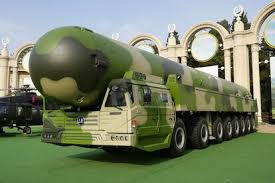
Recent defense assessments indicate that China may have loaded more than 100 intercontinental ballistic missiles into newly constructed silo fields. These silo sites, located in regions near China’s northern borders, are believed to house solid-fueled missile systems capable of reaching long-range targets. This marks a substantial shift from China’s historically smaller and more restrained nuclear force posture. Analysts note that the pace of this expansion appears faster than that of any other nuclear-armed nation in recent years, signaling a clear intent to enhance strategic deterrence.
China’s Position on Arms Control and Nuclear Strategy
Despite international concern, China has consistently stated that it follows a defensive nuclear strategy. Officials emphasize that its nuclear forces are maintained at the minimum level necessary for national security and that the country adheres to a no-first-use nuclear policy. Beijing has also rejected claims of aggressive military buildup, arguing that such reports misrepresent its intentions and distort the global narrative. At the same time, there appears to be limited interest from China in participating in broader arms control discussions, particularly those involving multilateral nuclear reduction frameworks.
Nuclear Stockpile Estimates and Future Projections
Current estimates suggest that China’s nuclear warhead stockpile remains in the low hundreds, reflecting a slower production rate compared to earlier periods. However, long-term projections indicate a steady upward trajectory, with the total number of warheads potentially exceeding one thousand within the next decade. This anticipated growth has fueled debate among security experts about the implications for global nuclear deterrence and whether existing arms control mechanisms are sufficient to manage emerging risks.
Regional Security and the Taiwan Factor
China’s military modernization extends beyond nuclear capabilities and is closely linked to regional security objectives. Defense analysts assess that China aims to develop the capacity to successfully conduct large-scale military operations in the Taiwan region within the coming years. Taiwan holds significant strategic importance, and Beijing continues to view the island as an integral part of its territory. Military planning scenarios reportedly include a range of options, from conventional operations to long-range strike capabilities that could challenge external military presence in the broader Asia-Pacific region.
Impact of Global Arms Control Challenges
The broader international arms control environment is also undergoing significant strain. The potential expiration of longstanding nuclear agreements between major powers has raised fears of a renewed arms race involving multiple states. Experts warn that the absence of effective diplomatic engagement, combined with expanding arsenals, could undermine decades of efforts aimed at reducing nuclear risks. Many argue that transparency, dialogue, and confidence-building measures are more critical than ever in preventing escalation.
Internal Reforms and Military Readiness
Alongside external expansion, China is pursuing internal reforms within its defense establishment. Anti-corruption initiatives have targeted key sectors of the military and defense industry, resulting in investigations and leadership changes across several state-owned arms companies. While these actions may temporarily affect operational readiness, analysts believe they could ultimately strengthen institutional efficiency and long-term military effectiveness. Economic impacts have been noted as well, with defense-related revenues experiencing short-term declines amid procurement slowdowns.
Conclusion: A Transforming Strategic Reality
China’s evolving nuclear and military posture represents a significant transformation in the global security landscape. As nuclear capabilities expand and traditional arms control frameworks face uncertainty, the importance of international engagement and strategic communication becomes increasingly evident. Whether these developments lead to heightened instability or renewed diplomatic efforts will depend largely on how global powers respond to the shifting dynamics of deterrence, security, and cooperation.