Immigration – Federal Crackdown Sparks Force Concerns Nationwide
Immigration – Federal immigration operations carried out under President Donald Trump have come under growing scrutiny after numerous confrontations between officers and protesters resulted in injuries across several states. While firearms have been used in a limited number of cases, federal agents have more frequently relied on crowd-control weapons such as tear gas, pepper spray and rubber projectiles. Civil rights attorneys, medical professionals and several federal judges have questioned whether those tactics were deployed appropriately.
Rising Tensions During Immigration Operations
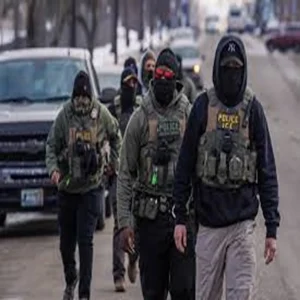
Since the spring, Department of Homeland Security personnel have conducted highly visible enforcement actions in cities including Los Angeles, Chicago, Portland and Minneapolis. Officers, often masked and equipped with tactical gear, have encountered crowds protesting immigration arrests in neighborhoods and outside processing facilities.
A review of incidents by news organizations, supported by court records and video footage, indicates that so-called less lethal weapons were repeatedly used during these encounters. In multiple states, judges have found that force appeared to be applied indiscriminately, sometimes affecting peaceful demonstrators and bystanders.
Officials at DHS have defended the conduct of their officers, stating that agents face coordinated resistance and, in some cases, direct attacks. The agency maintains that its personnel are trained in de-escalation and instructed to use only the minimum force necessary.
Injuries and Court Intervention
In Minneapolis, two fatal shootings during enforcement operations intensified public anger earlier this year. The deaths prompted protests that were met with tear gas and flash-bang devices. Following legal challenges, a federal judge temporarily restricted certain crowd-control measures, citing concerns over constitutional rights.
Similar rulings have emerged in Illinois and Oregon. In Chicago, video evidence presented in court showed officers deploying chemical agents toward crowds that included journalists and residents who were not engaging in violence. A judge described the conduct as troubling and ordered tighter limits on the use of chemical munitions.
Despite those rulings, the administration has appealed some court orders, arguing that officers must retain discretion to protect themselves in rapidly evolving situations.
Protesters Describe Severe Injuries
Several demonstrators have reported lasting physical harm. In Santa Ana, California, a protester said she was struck in the forehead by a rubber projectile, resulting in ongoing neurological symptoms. In Camarillo, a musician who joined a roadside protest near an agricultural facility said he suffered damage to his hand after being hit by what he believes was a tear gas canister.
Medical records reviewed in related lawsuits document cases of broken bones, concussions and burns. In Portland, an emergency room nurse stated he experienced balance issues after being hit in the face with a canister while speaking through a megaphone. Family members in suburban Chicago said a chemical spray entered their vehicle during an operation, affecting their young child.
DHS has not publicly released detailed figures on how many use-of-force reports were filed over the past year or how many internal investigations resulted in discipline.
Federal Response and Policy Debate
In public statements, DHS officials have emphasized that officers face significant threats, including objects thrown at them and attempts to obstruct arrests. The agency cited cases in which officers were allegedly assaulted during operations, noting that suspects in those incidents face pending charges.
Law enforcement experts remain divided on the broader strategy. Some argue that deploying heavily armed teams into densely populated neighborhoods can heighten tensions and increase the likelihood of confrontation. Policy groups that revisited crowd-control guidelines after nationwide protests in 2020 have advised limiting the use of chemical agents and projectiles, particularly against peaceful demonstrators.
The administration has recently signaled a shift toward more targeted enforcement rather than large-scale, citywide operations. Two senior DHS officials indicated there are no immediate plans for additional major surges similar to those seen in Minneapolis, though new officers are still being trained.
Communities Grapple With Impact
In affected neighborhoods, residents describe disruptions ranging from school lockdowns to canceled public events. Local officials in several cities have criticized what they view as aggressive tactics, while federal leaders argue the operations are necessary to enforce immigration law.
As litigation continues and investigations proceed, the debate over how immigration enforcement should be conducted remains unresolved. Courts are weighing constitutional protections against public safety concerns, and policymakers face renewed pressure to clarify standards governing federal use of force.