Federal : Court Restrains Immigration Enforcement Tactics Amid Rising Civil Liberties Concerns
Federal : A federal court ruling issued on Friday has significantly altered the landscape of protest policing in Minneapolis, placing strict limits on how federal immigration agents may interact with peaceful demonstrators. The decision arrives at a tense moment marked by heightened enforcement actions, public outcry, and deepening political conflict between federal authorities and Minnesota’s state and city leadership.
Background of the Minneapolis Enforcement Operation
The ruling stems from ongoing federal activity under a large-scale enforcement initiative that has brought thousands of federal officers into Minnesota. The operation has focused on immigration enforcement actions, including deportation efforts and investigations into alleged fraud within local communities. As federal presence expanded, so did public demonstrations, many of them organized to observe, question, or criticize the conduct of immigration agents operating in public spaces.
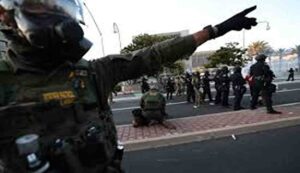
Protesters alleged that these enforcement actions were accompanied by aggressive crowd control methods, including arrests and the use of chemical irritants, even when demonstrations remained peaceful. These claims formed the basis of a lawsuit filed earlier in the winter, arguing that such tactics violated constitutional protections.
Details of the Federal Judge’s Order
In an extensive written opinion, the court barred federal agents from arresting individuals engaged in peaceful and unobstructed protest activity. The order also prohibits the use of nonlethal munitions, such as pepper spray, and other crowd dispersal tools against demonstrators who are not interfering with law enforcement duties.
Additionally, the ruling restricts agents from stopping vehicles that follow enforcement teams, provided those vehicles maintain a safe and appropriate distance. The judge emphasized that observation and criticism of government action, when conducted without force or obstruction, fall squarely within constitutional safeguards.
Constitutional Reasoning and Legal Standards
Central to the court’s reasoning was the distinction between peaceful protest and unlawful conduct. The ruling underscored that constitutional protections apply to speech and assembly, not to acts of violence or obstruction. After reviewing evidence presented by both sides, the judge concluded that demonstrators largely acted as observers and critics, rather than as impediments to federal operations.
The court also noted that there was no indication the enforcement operation was winding down. Instead, the continued expansion of federal activity increased the likelihood of repeated confrontations, making judicial intervention necessary to prevent ongoing constitutional violations.
Federal Government Response and Opposition
Federal officials swiftly criticized the decision, arguing that it mischaracterized enforcement actions and undermined officer safety. Government spokespersons maintained that agents acted within the bounds of the law to protect themselves and ensure the effectiveness of their operations. Statements emphasized that obstructing law enforcement remains a serious offense and that violent conduct will not be tolerated.
The administration signaled that it may pursue an immediate appeal, setting the stage for further legal battles over the limits of federal authority and protest rights.
Scrutiny of State and Local Leaders
Alongside the court ruling, federal prosecutors initiated an inquiry into whether Minnesota’s governor and the mayor of Minneapolis may have obstructed immigration enforcement efforts. Grand jury subpoenas were reportedly issued seeking information related to potential violations of federal statutes that prohibit conspiracies to interfere with federal officers.
This move has intensified accusations that the justice system is being used as a political weapon. State leaders have publicly condemned the investigation, arguing that federal authorities are targeting vocal critics while failing to fully address controversial enforcement incidents.
Community Reaction and Public Safety Debate
Local officials and community advocates have repeatedly called for federal immigration agents to leave the state, claiming their presence has fueled fear and endangered public safety. Demonstrators argue that peaceful protest is a necessary response to what they view as excessive enforcement tactics and lack of accountability.
The ruling aligns with similar decisions in other major cities, where courts have found that aggressive responses to peaceful protests violated constitutional principles. Civil liberties advocates see these rulings as a reaffirmation of fundamental rights during times of political tension.
Broader Implications for Protest Policing
This decision may have lasting consequences beyond Minnesota. By clearly defining the boundaries of lawful protest policing, the ruling provides a framework that other courts may follow when evaluating similar disputes. It also sends a signal to federal agencies that enforcement objectives must be balanced against constitutional obligations.
As enforcement operations continue and legal challenges mount, the relationship between federal authority, local governance, and public dissent remains under intense scrutiny. Whether through appeals or additional litigation, the debate over immigration enforcement and civil liberties is far from resolved.