Bankruptcy – Eddie Bauer Files Chapter 11, Stores to Close
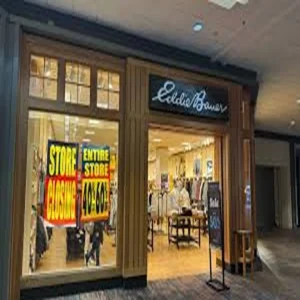
Bankruptcy – The operator managing nearly 180 Eddie Bauer stores across the United States and Canada has filed for Chapter 11 bankruptcy protection, citing prolonged sales declines and mounting financial pressures. The move marks another turning point for the long-established outdoor apparel retailer as it attempts to stabilize operations in a challenging retail climate.
Restructuring Plan Filed in New Jersey Court
Eddie Bauer LLC confirmed Monday that it submitted its bankruptcy petition to the U.S. Bankruptcy Court for the District of New Jersey. Alongside the filing, the company reached an agreement with secured lenders aimed at restructuring its debt and preserving value for stakeholders.
Most of the brand’s retail and outlet locations in the U.S. and Canada are expected to remain open during the court-supervised process. However, certain stores will be closed as part of a broader effort to streamline operations. Company officials indicated that a formal sales process will take place under court oversight. If a buyer is not secured, the retailer may proceed with winding down its North American store network.
Marc Rosen, chief executive of Catalyst Brands, which holds the license to operate Eddie Bauer stores in the U.S. and Canada, described the decision as difficult but necessary. He said the restructuring is intended to protect the company’s financial position while allowing Catalyst Brands to maintain liquidity and profitability.
International and Online Operations Unaffected
Stores operating outside North America are not included in the Chapter 11 filing. Those locations are managed by separate licensees and will continue regular business operations.
The intellectual property tied to the Eddie Bauer name remains under the ownership of Authentic Brands Group. The company stated that it may license the brand to other operators in the future. Meanwhile, other brands within the Catalyst Brands portfolio are not impacted by the filing.
E-commerce and wholesale divisions will also continue without interruption. These segments are operated by Outdoor 5 LLC following a transition completed earlier this year, which became effective in early February.
Part of a Broader Retail Shake-Up
Eddie Bauer joins a growing number of U.S. retailers adjusting their footprints as consumer habits shift and operating costs rise. Several well-known chains have either sought bankruptcy protection or announced significant store closures in recent months.
The parent company of Saks Fifth Avenue recently filed for bankruptcy after facing competitive pressure and heavy debt linked to its acquisition of Neiman Marcus. Shortly after, it announced plans to close most Saks Off 5th locations. In another example, Amazon confirmed it would shutter nearly all Amazon Go and Amazon Fresh stores as it narrows its grocery strategy around Whole Foods Market.
These developments reflect broader structural changes in brick-and-mortar retail, where brands are reassessing physical store investments and focusing on profitable segments.
A Century-Old Brand with Deep Roots
Founded in Seattle in 1920 as Bauer’s Sports Shop, the company began as a destination for outdoor enthusiasts. Over time, it gained national attention for innovation in cold-weather gear. In 1936, it introduced the Skyliner jacket, one of the first American goose-down insulated coats to receive a patent. During World War II, the company supplied more than 50,000 jackets to the U.S. military.
The brand also played a role in mountaineering history, outfitting American climber James W. Whittaker when he reached the summit of Mount Everest in 1963.
Ownership changed hands several times over the decades. After being acquired by General Mills in the 1970s and later by Spiegel Inc., the company experienced its first bankruptcy in 2003 following Spiegel’s financial collapse. A second Chapter 11 filing came in 2009, after which it was purchased by private equity investors. In 2021, Authentic Brands Group and SPARC Group acquired the company, and Catalyst Brands was later formed through a merger involving SPARC and JCPenney.
Ongoing Challenges in a Competitive Market
At its peak in 2001, Eddie Bauer operated nearly 600 stores. Industry analysts note that the brand has struggled to maintain relevance amid stronger competition from outdoor labels such as Fjallraven and Arc’teryx. Rising inflation, tariff uncertainty, and increased operating expenses have further strained performance.
Rosen acknowledged that while recent efforts improved product development and marketing strategies, those initiatives were not enough to reverse several years of weakening results.
The restructuring now underway will determine whether the century-old retailer can chart a sustainable path forward or significantly reduce its presence in North America.