America’s Measles Comeback: A Growing Public Health Warning
America’s Measles Comeback: At the beginning of the 21st century, measles felt like a closed chapter in the United States. The disease had been declared eliminated in 2000, thanks to widespread immunization and strong public health systems. For years, most Americans rarely thought about measles as a real threat. However, recent developments suggest that this sense of security may no longer be justified, and the country could be facing a serious reversal of progress.
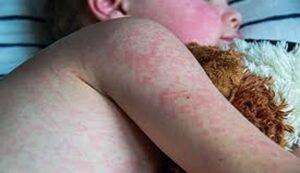
Measles Elimination and What It Means
Measles is still a major global health concern, claiming nearly 100,000 lives worldwide each year. In the United States, the situation was very different for decades. After sustained vaccination efforts, measles was considered eliminated, meaning there was no continuous local transmission of the same virus strain for at least one year. This status is assessed by the Pan American Health Organization, which operates under the umbrella of the World Health Organization.
Elimination does not mean the disease no longer exists. Imported cases can still occur, but outbreaks are expected to be quickly contained. The concern now is that repeated and prolonged outbreaks may signal a return to endemic transmission.
Rising Outbreaks Across the United States
In recent years, the United States has experienced multiple measles outbreaks across different states. A major outbreak in Texas in early 2025 led to hundreds of confirmed cases. Although that outbreak eventually slowed, new clusters appeared in South Carolina, as well as in Utah and Arizona. These outbreaks occurring within a relatively short period have raised alarms among public health officials.
The Centers for Disease Control and Prevention has closely monitored these developments. According to federal health authorities, there is currently no clear evidence that all these outbreaks are connected as part of a single chain of transmission. Even so, the sheer number of cases is troubling and suggests increasing vulnerability within certain communities.
Lessons From Canada’s Experience
The United States is not alone in facing this challenge. In November, Canada lost its measles elimination status following a prolonged outbreak that resulted in more than 5,000 confirmed cases. Canadian health officials noted that the outbreak persisted for over a year, primarily affecting communities with low vaccination coverage.
This situation serves as a warning sign. The Pan American Health Organization is expected to review U.S. measles data, and experts worry that similar patterns could place the United States at risk of losing its elimination status as well.
Declining Vaccination Rates and Public Trust
One of the primary drivers behind the resurgence of measles is the steady decline in vaccination rates. In 2025 alone, the United States reported more than 2,000 measles cases, the highest annual total in decades. A striking majority of these cases occurred among unvaccinated individuals or those with unknown vaccination status.
Public health experts point to growing vaccine hesitancy as a major factor. Conflicting public messages about vaccines have contributed to confusion and mistrust. Statements emphasizing vaccination as purely a personal choice, including remarks by Robert F. Kennedy Jr., have sparked debate about individual freedom versus collective responsibility. While personal choice is important, infectious diseases highlight how individual decisions can impact entire communities.
Why Measles Is Especially Dangerous
Measles is one of the most contagious viruses known to humans. It spreads through airborne particles and can remain in the air for up to two hours after an infected person leaves a room. Symptoms usually appear one to two weeks after exposure and often begin with fever, cough, runny nose, and red eyes, followed by a distinctive rash.
The virus spreads rapidly in unprotected populations. If one person has measles, up to nine out of ten nearby individuals without immunity can become infected. While many people recover without long-term issues, measles can be extremely dangerous for young children, pregnant women, and individuals with weakened immune systems. Severe complications may include pneumonia, brain inflammation, hospitalization, and even death.
The Role of the MMR Vaccine
The most effective protection against measles is the measles, mumps, and rubella vaccine. This vaccine has been used safely for decades and provides long-lasting immunity. To maintain herd immunity and prevent outbreaks, approximately 95 percent of children need to be vaccinated.
Currently, vaccination coverage among kindergarten-aged children in the United States has dropped below this threshold. Even a small decline can create gaps in community protection, allowing the virus to spread more easily. Health professionals warn that unless vaccination rates improve, outbreaks may become more frequent and more severe.
Looking Ahead
The resurgence of measles is not just a medical issue; it is a reflection of broader social challenges involving trust, information, and public responsibility. Maintaining elimination status requires consistent effort, clear communication, and strong community participation. Without renewed focus on immunization and public awareness, the progress achieved over the past decades could continue to erode.
Public health history shows that diseases once controlled can return when vigilance fades. The current measles situation is a reminder that prevention depends not only on medical tools but also on collective action and informed decision-making.