TradePolicy – Jamieson Greer Shapes America’s Tariff Strategy Shift
TradePolicy – The direction of the United States’ trade agenda is increasingly being defined by a figure who has largely stayed out of the spotlight. Jamieson Greer, serving as the US Trade Representative, has become a central architect of Washington’s tariff-focused approach as the administration seeks to redraw long-standing global trade arrangements.
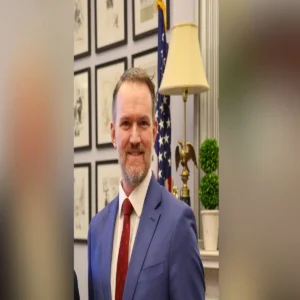
A Key Architect of Tariff Policy
At 45, Greer has assumed a pivotal role in advancing the administration’s trade priorities under President Donald Trump. Working closely with the White House, he has helped construct the legal and strategic foundations of a policy that relies heavily on tariffs to influence trading partners and reshape international commerce.
The strategy has extended to some of America’s largest economic counterparts, including China, Canada and Mexico. Tariffs have also been deployed as a bargaining tool in disputes with other nations, such as Colombia, reflecting a broader effort to assert leverage through trade measures.
Greer has publicly praised the shift, describing the changes to global trade structures as significant. His office has been responsible not only for implementing tariff increases but also for coordinating negotiations with dozens of countries affected by the evolving policy.
Legal Scrutiny at the Supreme Court
The administration’s tariff program now faces judicial review. The Supreme Court of the United States is examining whether certain duties imposed under emergency authorities comply with existing law. The outcome could have substantial consequences for the future of US trade policy.
A ruling that limits or overturns the measures would likely compel policymakers to reconsider elements of the current approach. For businesses and trading partners already navigating shifting rules, the legal proceedings add another layer of uncertainty.
Diplomatic Pressures and Global Talks
As legal questions unfold, diplomatic discussions continue. The administration is preparing for further engagement with Beijing, while also conducting talks with European and North American partners. Officials have maintained that the possibility of additional tariffs has strengthened Washington’s negotiating position.
However, frequent adjustments to policy have also unsettled companies that depend on predictable cross-border supply chains. Businesses across sectors have sought clarity on how long elevated tariffs might remain in place and whether exemptions could be expanded or withdrawn.
Reputation as a Steady Hand
Within Washington policy circles, Greer is often described as measured and composed, particularly in contrast to the volatility sometimes associated with trade debates. He previously worked closely with former US Trade Representative Robert E Lighthizer, who played a leading role in shaping earlier phases of the administration’s trade doctrine.
Greer has also coordinated with Treasury Secretary Scott Bessent in preparation for high-level interactions involving Chinese President Xi Jinping. While acknowledging the competitive dynamics between the United States and China, he has cautioned against escalating tensions into a broader economic confrontation that could disrupt global markets.
From Humble Beginnings to Trade Leadership
Greer’s personal journey differs from that of many senior officials in Washington. Raised in a working-class family in California, he spent part of his childhood in a mobile home and held service-sector jobs during his teenage years. He later attended Brigham Young University and served as a Mormon missionary in Europe, where he became fluent in French.
After completing law school and additional studies in Paris, Greer joined the military as a lawyer. His service took him to postings in Kansas, Turkey and Iraq. He has recalled moments in Iraq when courtroom proceedings were interrupted by incoming mortar fire, experiences he says shaped his calm approach to pressure.
In interviews, Greer has downplayed descriptions of “tensions” surrounding trade policy, though he has acknowledged that national security tariffs add complexity to negotiations. As the United States continues to redefine its commercial relationships, his influence on the country’s trade trajectory appears set to remain significant.