Manhattan Health: Federal Court Scrutiny Intensifies in Executive Murder Case
Manhattan Health: The federal case surrounding Luigi Mangione, a 27-year-old accused of fatally shooting a senior health insurance executive, took a critical turn as he appeared before a judge in Manhattan. The incident, which occurred outside a hotel in one of New York City’s busiest districts, has drawn nationwide attention due to both the victim’s corporate stature and the broader public reaction it triggered.
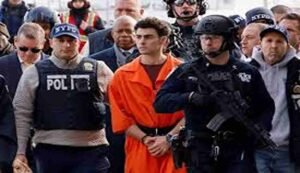
Mangione has pleaded not guilty to multiple charges, including murder, stalking, and weapons violations, related to the death of Brian Thompson, the chief executive officer of UnitedHealthcare. While elected officials and industry leaders strongly condemned the killing, parts of the public discourse revealed simmering frustration over healthcare costs and insurance practices, which complicated the narrative surrounding the accused.
Court Appearance and Evidentiary Dispute
Mangione appeared in federal court wearing prison attire and ankle shackles as proceedings focused on whether crucial physical evidence could be used at trial. The hearing was overseen by Margaret Garnett, who convened the session to evaluate the legality of a police search conducted during Mangione’s arrest in Pennsylvania.
At the center of the dispute is a backpack seized by law enforcement, which reportedly contained a handgun, a suppressor, and handwritten journal entries. Defense attorneys argue that this search violated constitutional protections because it was conducted without a warrant. According to the defense, excluding this evidence could significantly weaken the prosecution’s case, particularly as prosecutors are seeking the death penalty.
Defense Strategy and Police Procedure Questions
During the hearing, Mangione’s legal team closely examined the arresting officers’ adherence to departmental procedures. Testimony was given by Nathan Snyder, a senior official from the Altoona Police Department. He described standard practices for searching a suspect’s belongings after arrest, noting that officers typically pursue a warrant if they uncover illegal items.
However, under further questioning, Snyder acknowledged that if officers discovered a firearm, they might continue searching for additional dangerous objects without immediately seeking judicial authorization. This distinction became a focal point, as prosecutors contend the search was justified for officer safety, while defense attorneys insist it exceeded lawful bounds.
Prosecution Position and Legal Justification
Federal prosecutors from the U.S. Attorney’s Office for the Southern District of New York maintain that the search fell within legal limits. They argue that Mangione was lawfully arrested for presenting false identification and that officers were permitted to inspect his belongings before transport to ensure there were no immediate threats.
According to the prosecution, this safety-based exception negates the need for a warrant at that stage. They further assert that suppressing the evidence would undermine legitimate law enforcement practices designed to protect officers and the public during custodial arrests.
Parallel State Case and Broader Implications
In addition to the federal proceedings, Mangione faces a separate prosecution in New York state court initiated by the office of Alvin Bragg. That case also includes a request from the defense to suppress the backpack evidence, meaning multiple judges are now assessing similar constitutional questions.
No trial date has yet been scheduled in either jurisdiction. Legal experts note that rulings on evidence admissibility could have far-reaching consequences, not only for Mangione’s fate but also for how courts interpret search-and-seizure standards in complex, multi-state investigations.
Public Reaction and Ongoing Developments
Beyond the courtroom, the case continues to resonate publicly due to its intersection with debates over corporate power, healthcare policy, and criminal justice. While authorities stress the gravity of the alleged crime, the polarized public response underscores deeper societal tensions.
As hearings continue, all eyes remain on the courts to determine whether key evidence will stand and whether prosecutors will be permitted to pursue the most severe penalties available under federal law.