Federal Court : Reverses High-Profile Murder Conviction Linked to Run-DMC Icon
Federal Court: A major development emerged from the United States federal court system when a judge overturned the murder conviction connected to the killing of hip-hop pioneer Jam Master Jay. The ruling has reignited public discussion around one of the most tragic and long-unsolved cases in music history. The decision highlights the importance of evidentiary standards, motive, and judicial scrutiny in criminal trials, especially those involving decades-old crimes.
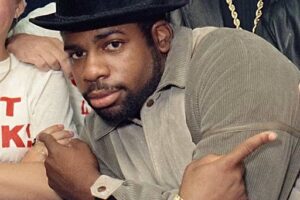
Background of the Case
Jam Master Jay, whose real name was Jason William Mizell, was a founding member of the influential rap group Run-DMC. He was fatally shot inside his recording studio in Queens, New York, on October 30, 2002. The killing shocked the global hip-hop community and remained unresolved for nearly twenty years, becoming one of the most notorious unsolved murders in music history.
In February 2024, two men, Karl “Little D” Jordan Jr. and Ronald Washington, were convicted in federal court for Mizell’s murder. Prosecutors alleged that the killing was tied to a failed narcotics operation and motivated by retaliation over a drug distribution deal involving Baltimore.
Judicial Review and Overturned Conviction
On Friday, U.S. District Judge LaShann DeArcy Hall overturned Jordan’s conviction. The court granted his motion for acquittal, determining that prosecutors failed to adequately prove that Jordan was motivated by the alleged drug deal dispute. While the judge conditionally denied Jordan’s request for a new trial, the acquittal effectively vacated his conviction.
The judge emphasized that criminal convictions must be supported by clear and convincing evidence, particularly regarding motive. In her ruling, she stated that the government’s argument connecting Jordan to retaliation over the Baltimore drug deal was speculative and unsupported by concrete proof.
Differing Outcomes for Co-Defendants
While Jordan’s conviction was overturned, the court denied similar motions filed by Ronald Washington. Judge Hall concluded that evidence presented during the trial could reasonably lead a jury to believe Washington acted out of retaliation after being excluded from a potentially lucrative drug distribution opportunity.
The judge highlighted that, unlike Washington, there was no reliable evidence demonstrating that Jordan felt cheated, financially harmed, or motivated to kill Mizell due to the failed deal. This distinction became central to the court’s decision.
Alleged Drug Trafficking Conspiracy
According to trial testimony, Jam Master Jay’s music career had slowed during the 1990s, and prosecutors alleged that he became involved in cocaine distribution. Evidence suggested that both Jordan and Washington participated in drug trafficking activities connected to Mizell in the early 2000s.
The prosecution claimed that a planned cocaine distribution operation in Baltimore was the core of the conspiracy. Mizell reportedly coordinated the plan and worked with a distributor in Baltimore, but that associate refused to work with Washington, allegedly sparking resentment.
Witness Testimony and Evidence
The trial featured testimony from eyewitnesses present at the studio during the shooting. One witness claimed to have seen Jordan fire the fatal shot, while another testified that she observed a man with a neck tattoo greeting Mizell moments before gunfire erupted. Jordan does have a neck tattoo, which prosecutors cited as supporting evidence.
However, Jordan consistently maintained his innocence, stating that he was at his girlfriend’s home at the time of the murder. His legal team argued that multiple witnesses could corroborate his alibi.
Questions Surrounding Alternative Suspects
Court filings also referenced testimony suggesting that Jay Bryant, another individual charged in connection with the case, may have been responsible for the shooting. Bryant has pleaded not guilty and is scheduled to stand trial in May. His DNA was reportedly found on a hat recovered at the crime scene, and an eyewitness described a person matching his appearance entering and leaving the building around the time of the shooting.
Jordan’s defense cited testimony from Bryant’s uncle, who claimed Bryant confessed to the killing on multiple occasions years after the incident.
Legal Significance and Ongoing Review
Judge Hall’s 29-page ruling underscored that criminal convictions cannot rest on conjecture. She concluded that the government failed to meet the high burden required to prove Jordan’s motive beyond a reasonable doubt. The ruling serves as a reminder of the judiciary’s role in safeguarding due process, even in emotionally charged and high-profile cases.
A spokesperson for the U.S. Attorney’s Office for the Eastern District of New York confirmed that the decision is currently under review, leaving open the possibility of further legal action.
Impact on the Legacy of the Case
The reversal of Jordan’s conviction adds another complex chapter to the long and painful story surrounding Jam Master Jay’s death. While the case remains partially unresolved, the ruling reinforces the principle that justice must be grounded in evidence rather than assumption, regardless of public pressure or historical significance.