US and Taiwan: Historic U.S.–Taiwan Defense Deal Signals a Major Shift in Regional Security
US and Taiwan: The United States has approved an unprecedented defense package worth 11.1 billion dollars for Taiwan, marking the largest weapons sale ever authorized for the island. This decision comes at a time when Taiwan faces growing military and diplomatic pressure from China, and it reflects a significant escalation in Washington’s long-standing commitment to Taiwan’s self-defense. The approval represents the second major arms deal under President Donald Trump’s current administration and underscores a broader strategy aimed at strengthening deterrence and maintaining stability in the Indo-Pacific region.
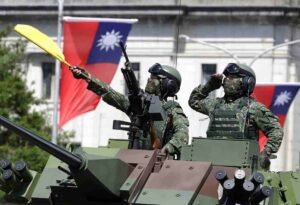
Background of the U.S.–Taiwan Defense Relationship
For decades, the United States has maintained a complex relationship with Taiwan. While Washington officially recognizes Beijing, it has continued to support Taiwan through unofficial ties and defense cooperation. Under U.S. law, America is obligated to provide Taiwan with the means to defend itself. Arms sales have therefore been a consistent feature of this relationship, though they remain a major point of contention with China.
This latest package comes amid heightened cross-strait tensions, as Beijing continues to assert its sovereignty claims over Taiwan, claims that the Taiwanese government firmly rejects. The scale of this deal reflects growing concern in Washington over regional security and the balance of power in East Asia.
Details of the Weapons Package
According to Taiwan’s Ministry of National Defense, the proposed sales include eight major defense items. These range from HIMARS rocket systems and advanced howitzers to Javelin anti-tank missiles, Altius loitering munition drones, and critical spare parts for existing military equipment. Together, these systems are designed to significantly enhance Taiwan’s defensive capabilities.
The ministry emphasized that the package is currently at the congressional notification stage, where the U.S. Congress retains the authority to review, modify, or block the sale. However, bipartisan support for Taiwan within Congress makes major obstacles unlikely.
Focus on Asymmetric Warfare Strategy
A key element of this arms deal is its alignment with Taiwan’s shift toward asymmetric warfare. Rather than relying solely on large and expensive platforms, Taiwan has been investing in mobile, flexible, and cost-effective systems that can counter a much larger adversary. Weapons such as precision rockets and drones are seen as crucial tools that can deliver targeted strikes and complicate any potential invasion plans.
U.S. defense officials have stated that these sales serve American national and security interests by supporting Taiwan’s military modernization and ensuring it maintains a credible defensive posture. The approach mirrors strategies seen in other conflicts, where smaller forces have successfully used advanced technology to counter numerically superior opponents.
Political and Strategic Implications
Taiwan’s leadership has welcomed the deal as a strong signal of international support. Presidential office spokesperson Karen Kuo stated that Taiwan will continue to push forward with defense reforms, strengthen society-wide resilience, and safeguard peace through strength. President Lai Ching-te recently reinforced this message by announcing a long-term supplementary defense budget of 40 billion dollars, covering the period from 2026 to 2033.
From a strategic perspective, the U.S. views Taiwan as critically important due to its geographic position, which effectively separates Northeast Asia from Southeast Asia. Maintaining stability in this area is seen as essential to broader regional security.
China’s Reaction and Regional Tensions
As expected, China strongly condemned the arms sale. Beijing’s foreign ministry accused the United States of undermining peace and stability in the Taiwan Strait and warned that supporting Taiwan with weapons would ultimately fail. Such reactions are consistent with China’s long-standing opposition to any foreign military support for Taiwan.
Despite these protests, U.S. officials have indicated that weapons sales to Taiwan may continue to increase. This stance reflects a broader effort to deter conflict by preserving military advantages in the region, a policy direction that has been welcomed by leaders in Taipei.
Conclusion
The approval of this record-breaking arms package represents a pivotal moment in U.S.–Taiwan relations. It highlights a shared focus on deterrence, defense modernization, and regional stability at a time of growing uncertainty in East Asia. While the move has intensified tensions with China, it also reinforces Taiwan’s ability to defend itself and signals Washington’s intent to remain a key player in shaping the security landscape of the Indo-Pacific.